Tell QuireMind what you want to learn and why. It builds the course, plans your study, tests you as you go, and gives you a tutor to think it through with. The more you use it, the better it fits you.
A reading app helps you read. A flashcard app helps you remember. A chatbot answers your questions, often so fast that you never work anything out yourself. You still have to fit the pieces together and decide what to learn next.
What it does
A reading app
Flashcards
A chatbot
A calendar
QuireMind
Make it for you
Read
Remember
Answer your questions
Plan your study
Know you
QuireMind does the whole job, for one subject and one person at a time.
II · How it works
From a question to a course that keeps up with you.
I
It asks first.
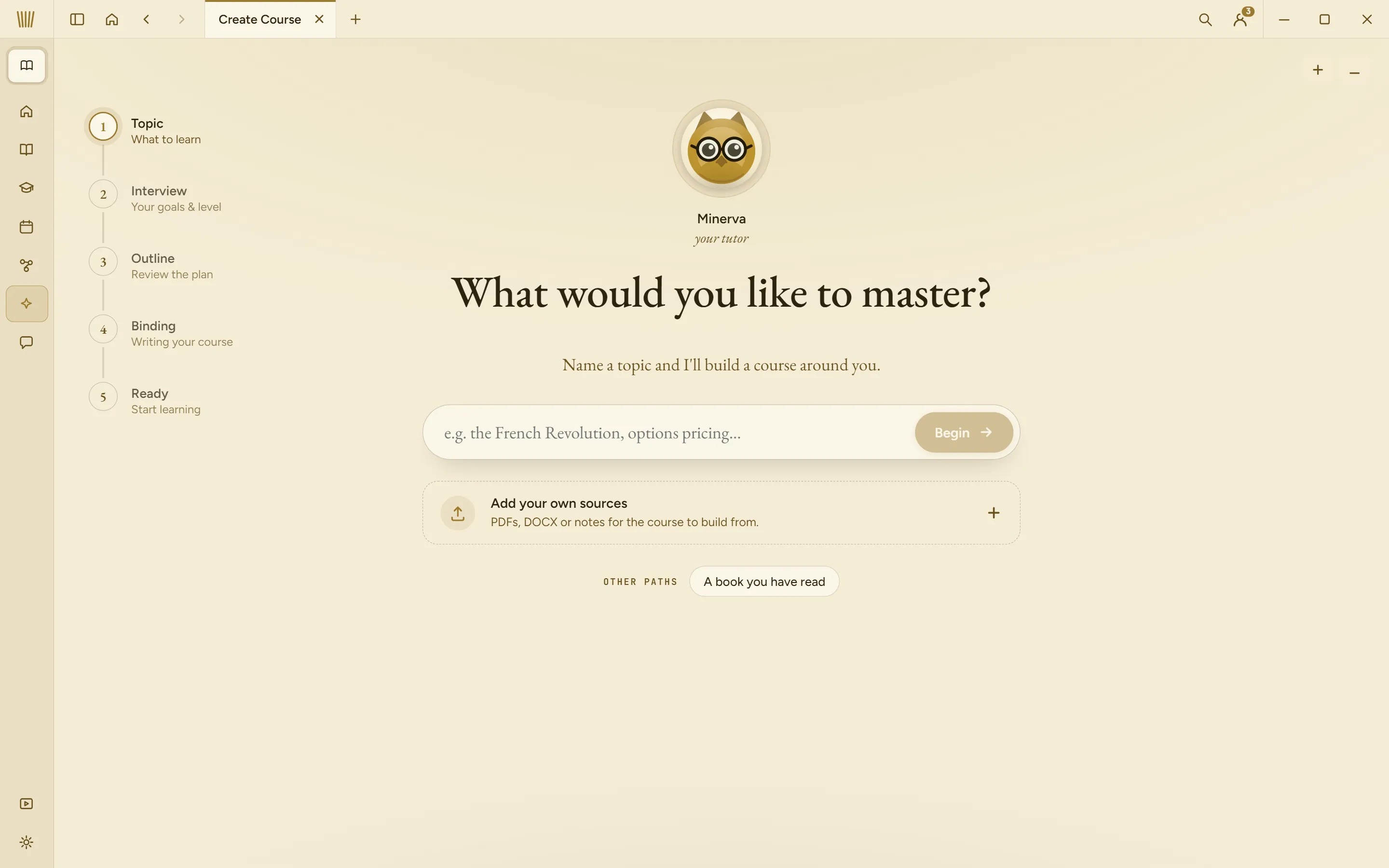
A short conversation about what you want to learn, why it matters to you, what you already know and how you like to be taught.
II
It writes your course.
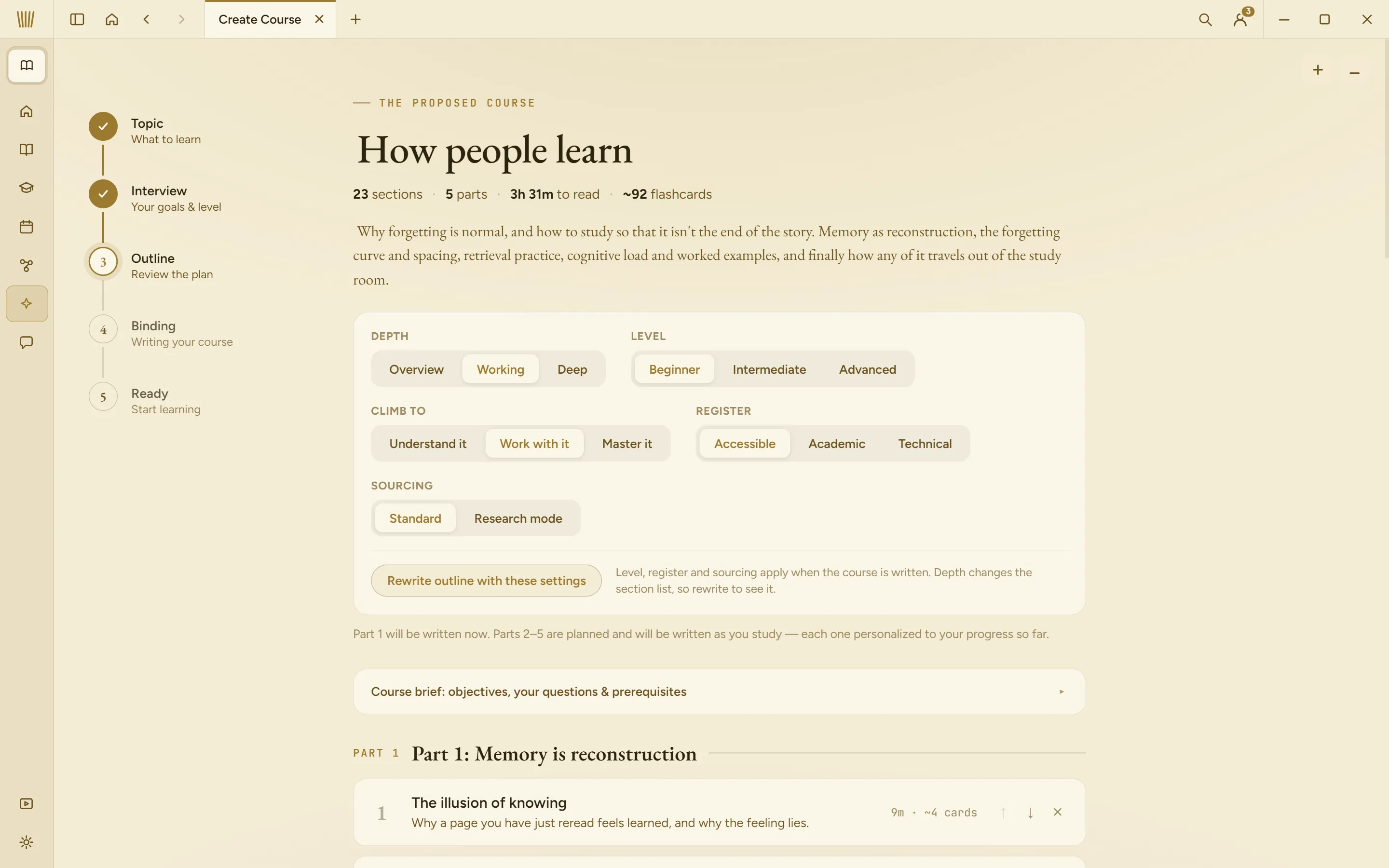
A plan in parts. Each part has a reading, the key terms and what you should be able to do afterwards. From a topic, or from your own PDFs, notes and web pages.
III
You study, and go deeper than the reading.
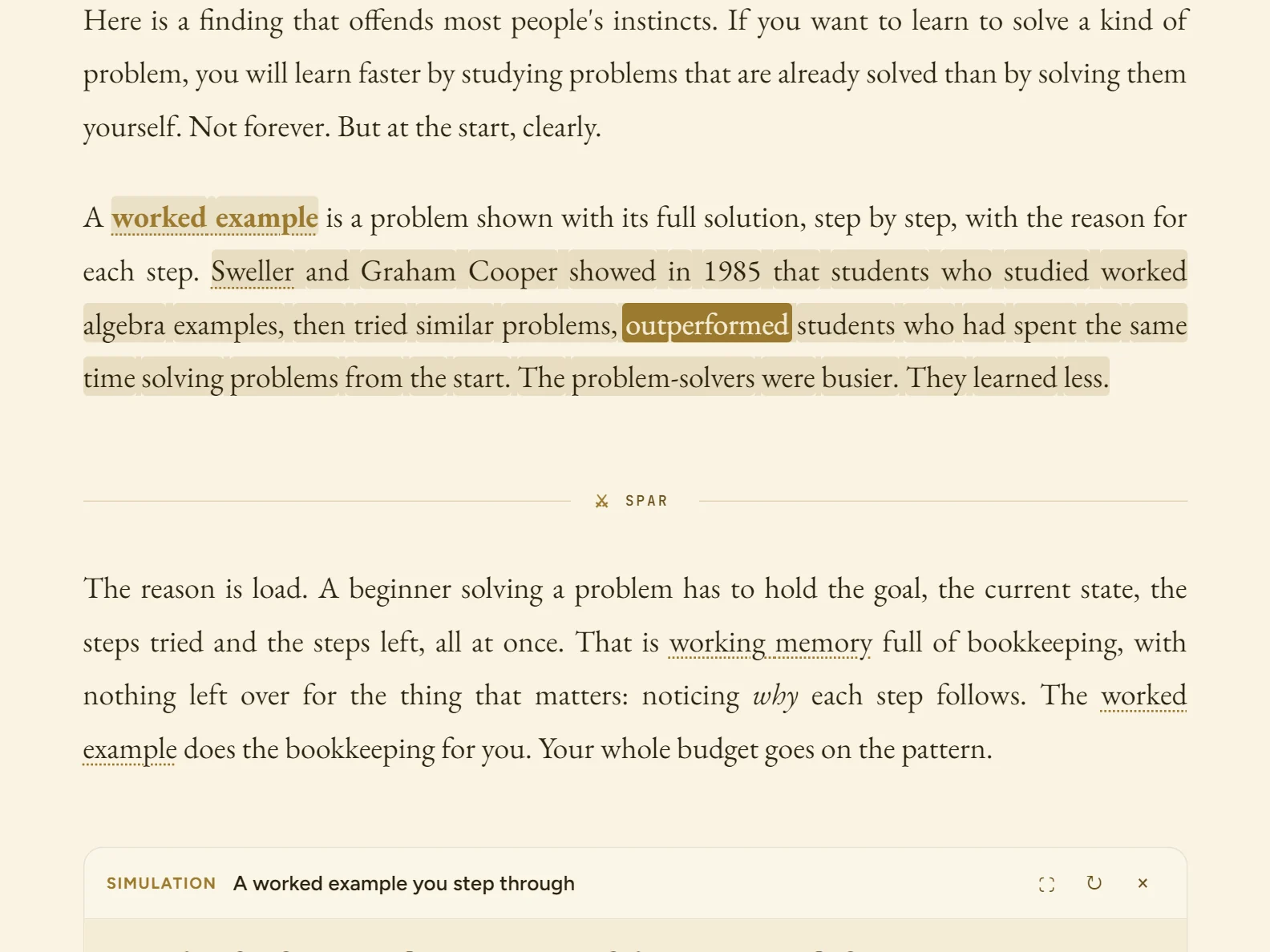
Read with a tutor in the margin. Then each concept climbs a staircase, one step at a time as you get it right.
IV
It keeps up with you.
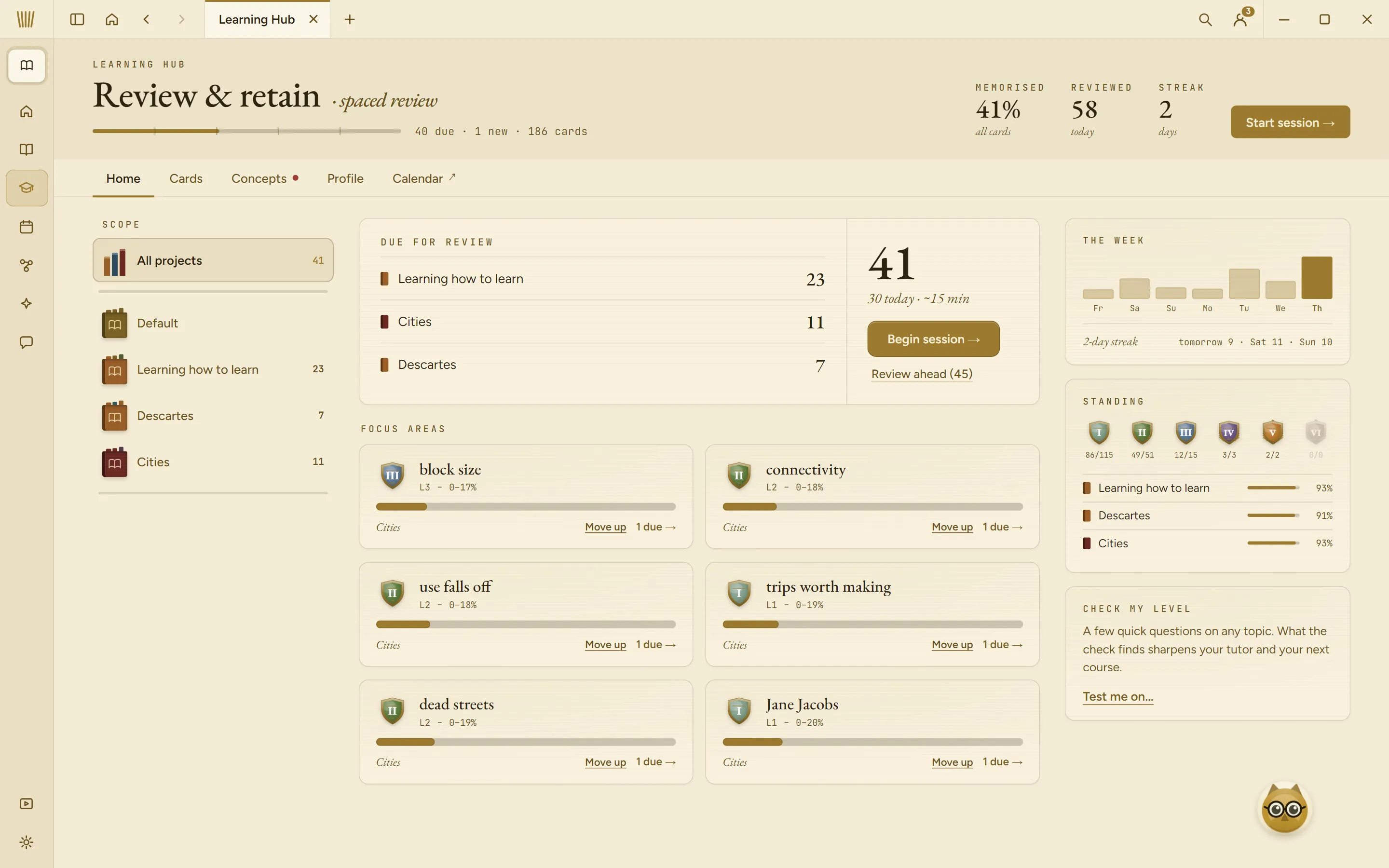
Reviews come back just before you'd forget. Later parts lean into what you found hard. The tutor remembers where you've struggled.
I · It asks firstII · A plan built from your answersIII · Your course, part by partIV · Reviews, scheduled for you
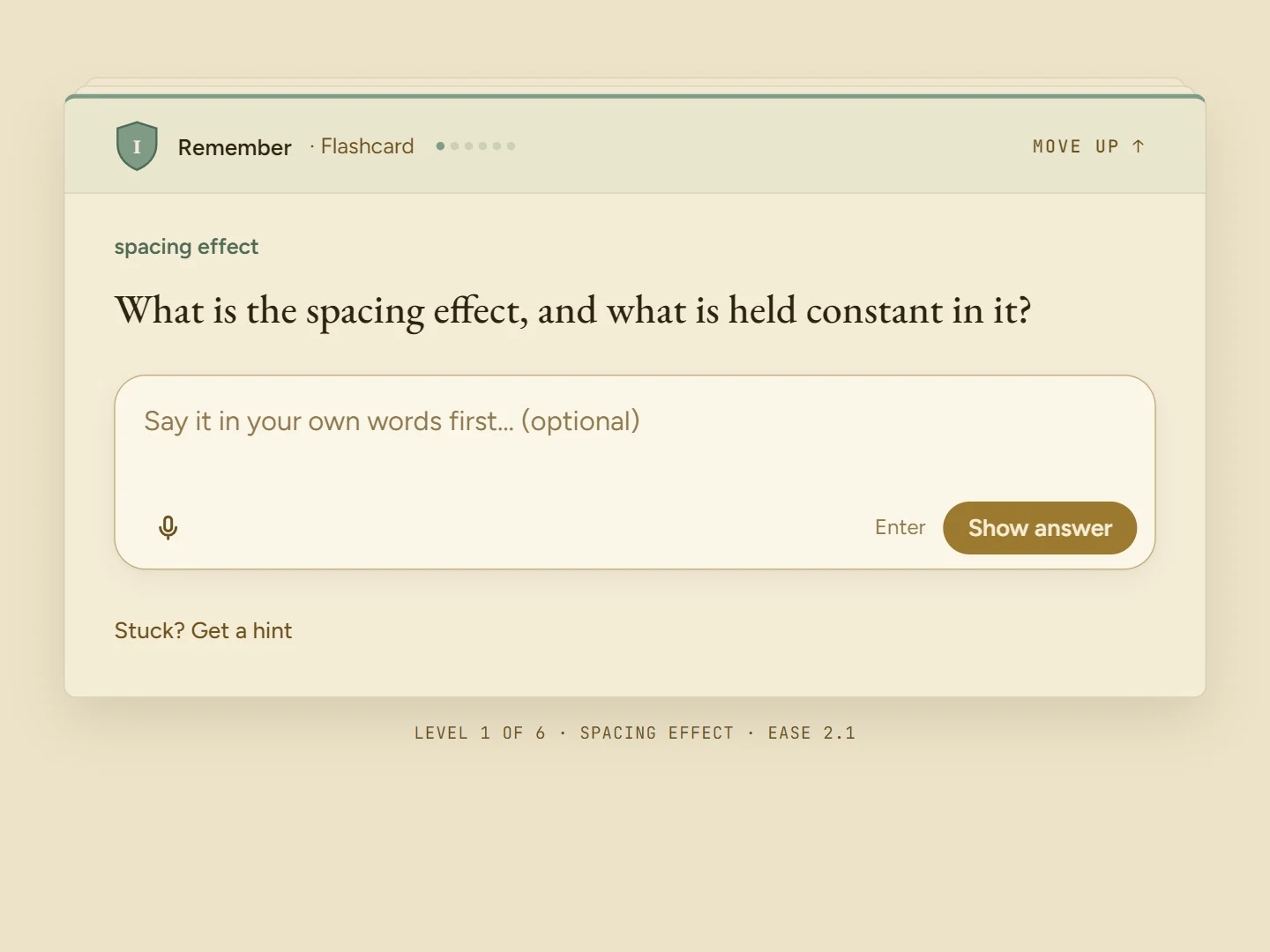
Step III, up close · the staircase
Remembering a term is the first step, not the goal.
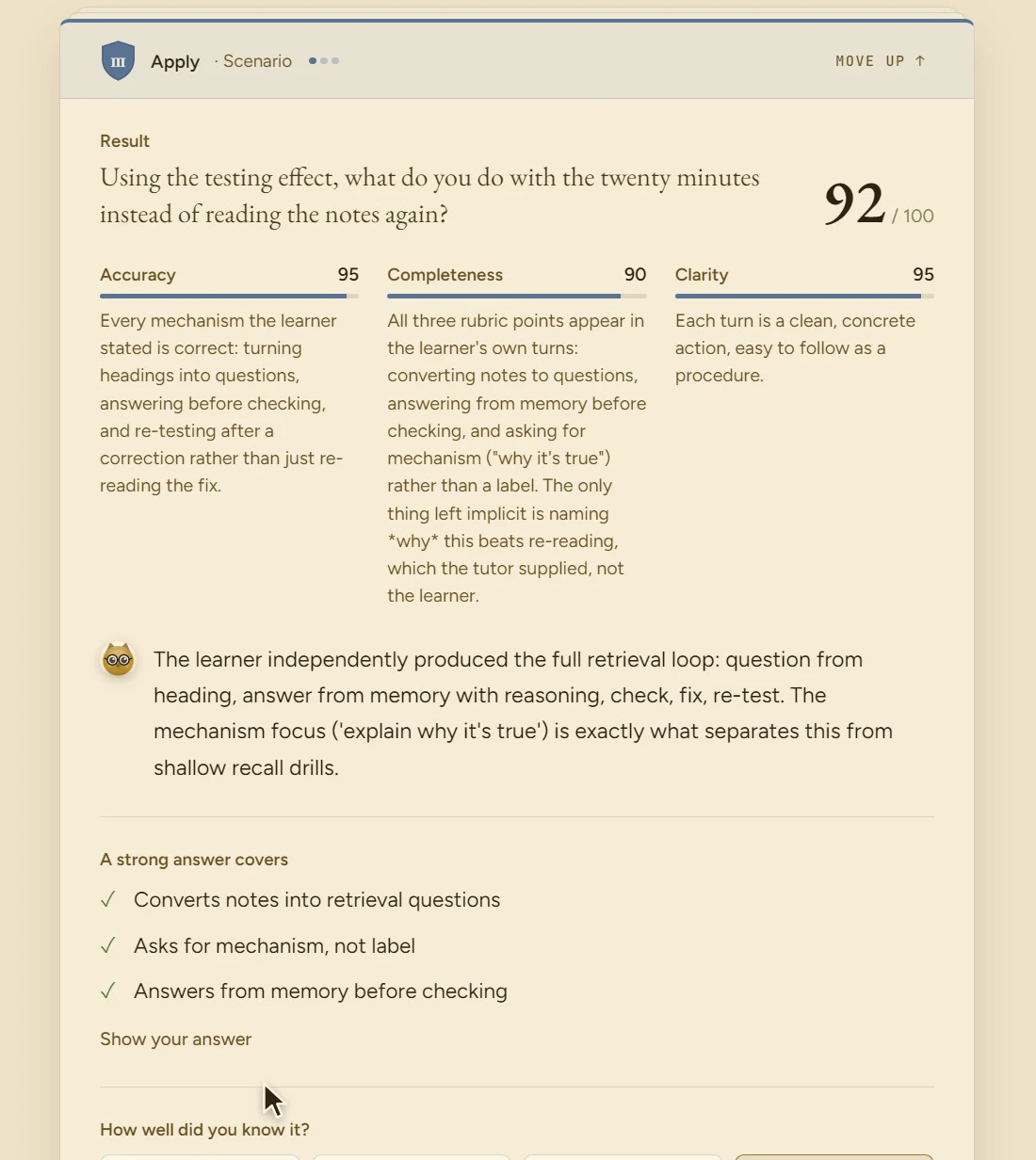
By the last step you can explain the concept to someone else in your own words. Written answers are graded, and when you've misunderstood something, it tells you exactly what.
A card in the study session · played out with the tutor, then rated
III · It learns you
It gets to know you, and shows you what it knows.
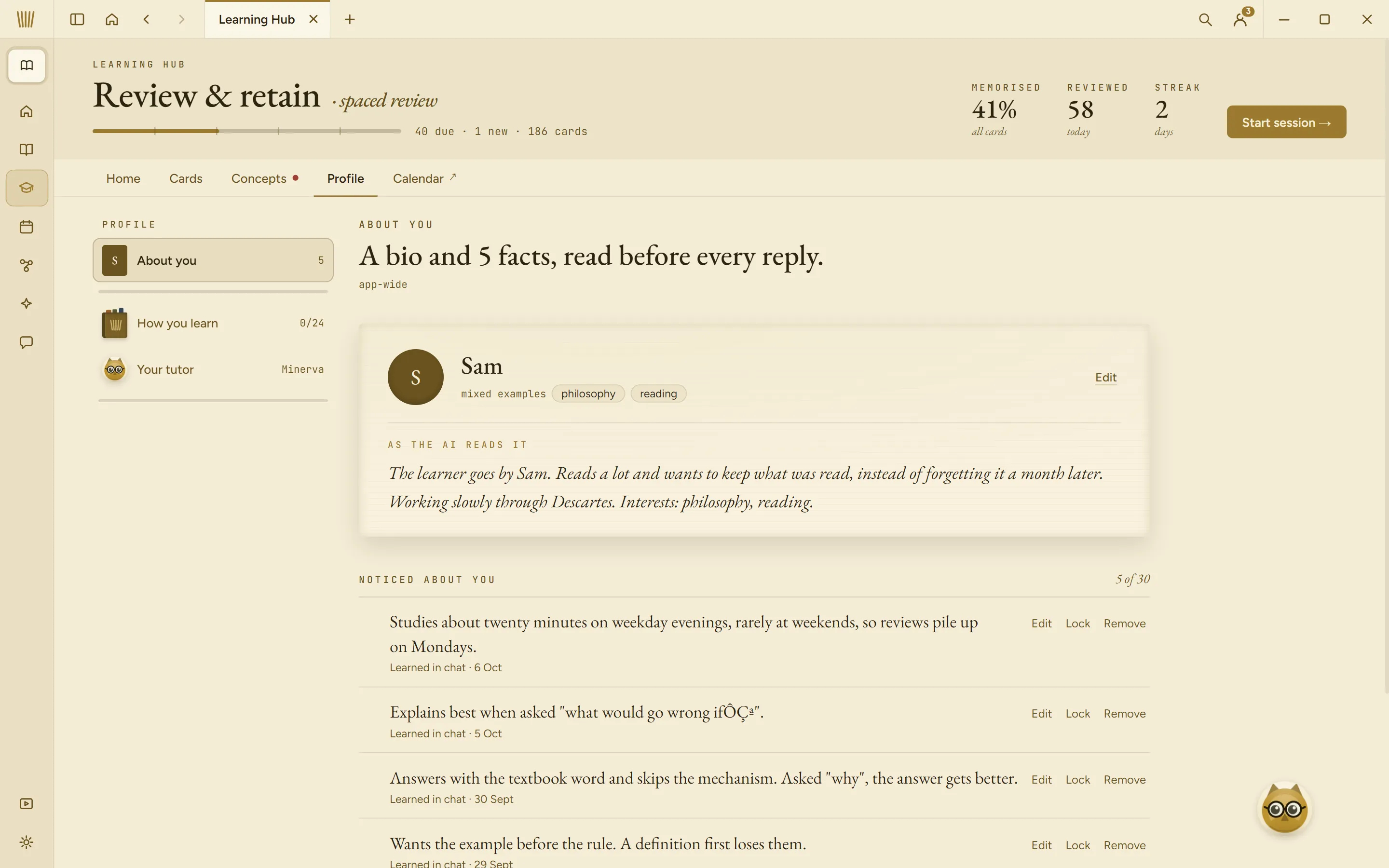
Everything QuireMind has learned about you is on one page: your goals, how you like to learn, what you've mastered and the misunderstandings it has noticed. Each line says where it came from: something you told it, something it noticed in conversation, or your own words.
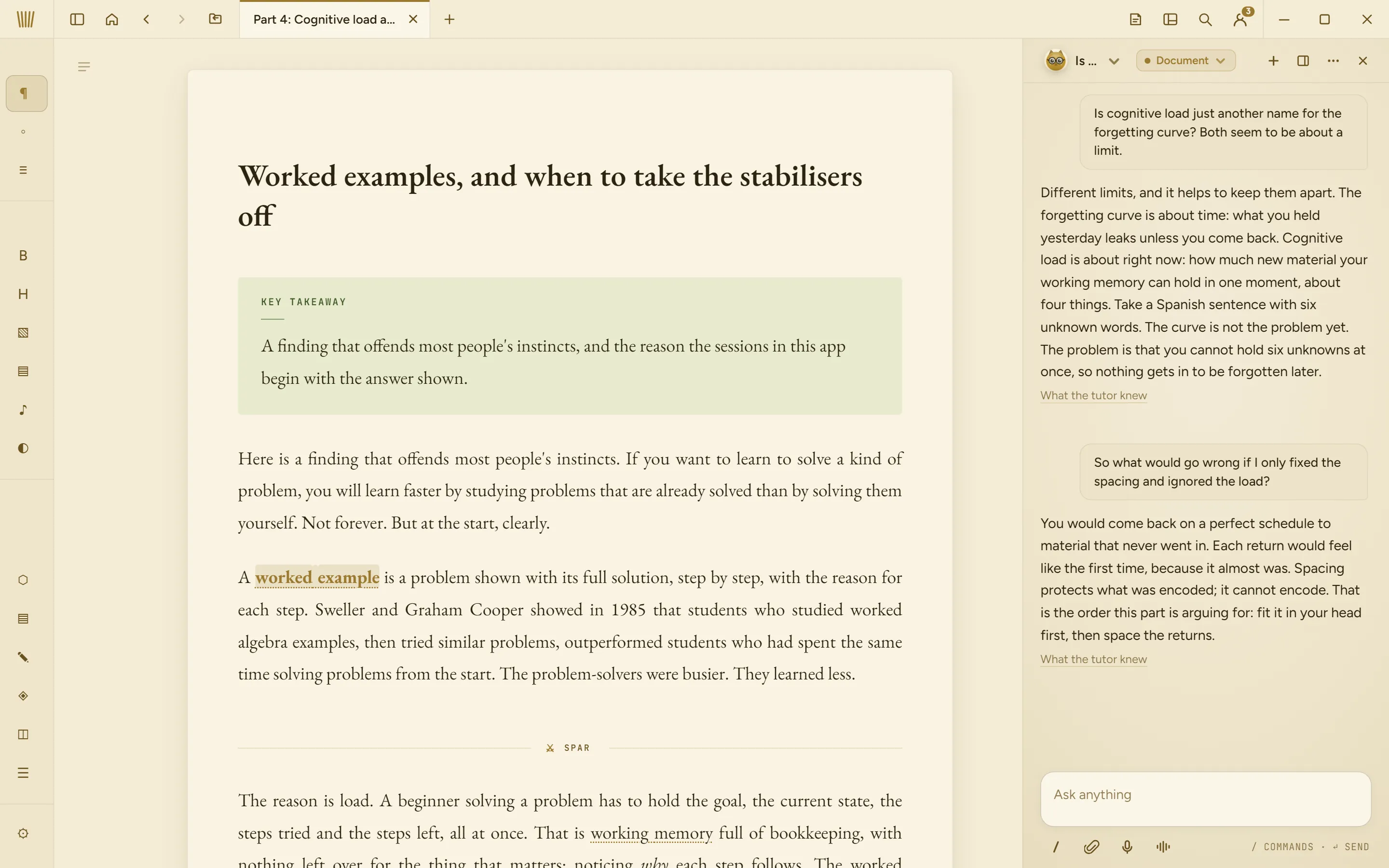
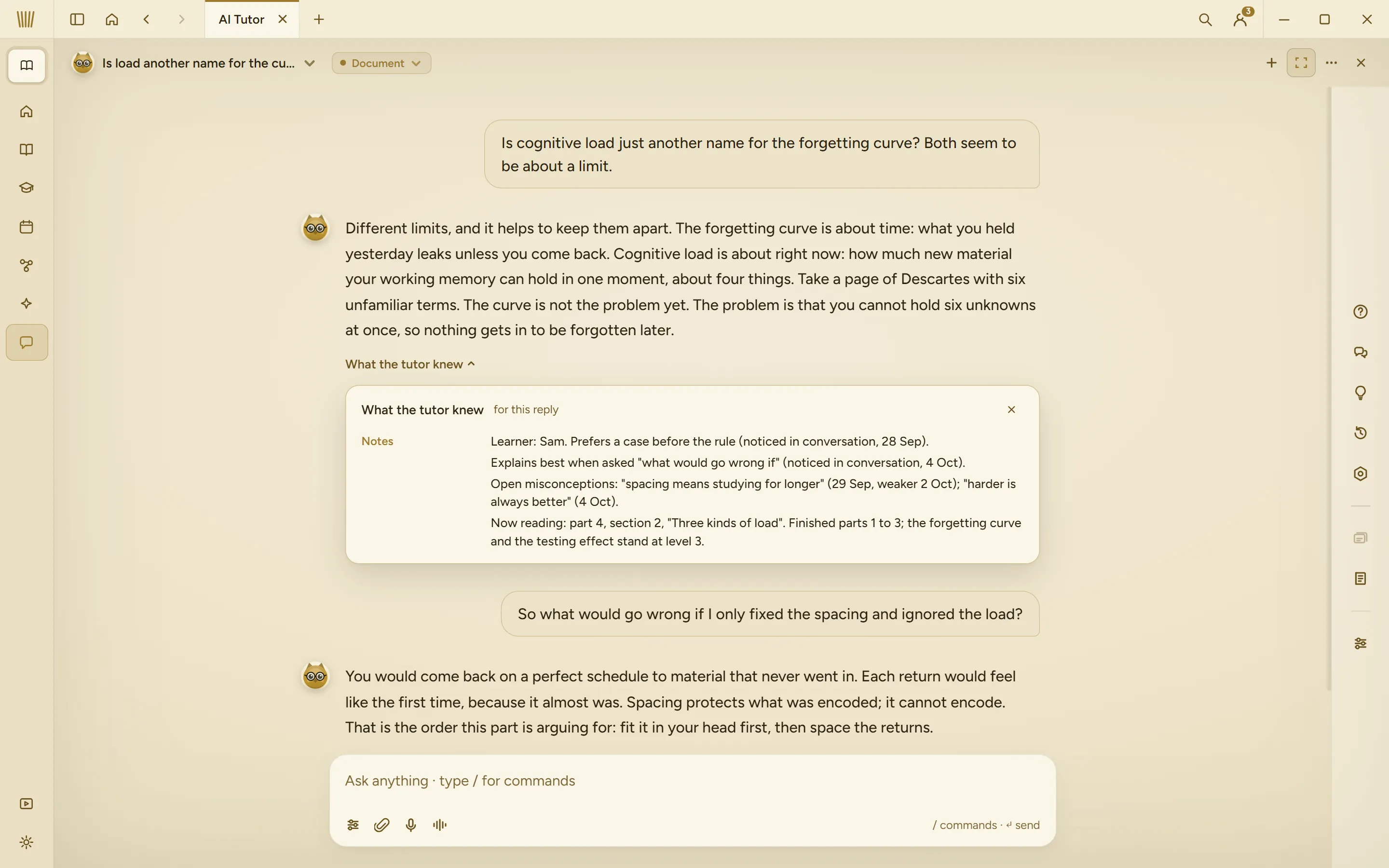
When the tutor answers you, you can open exactly what it knew about you at that moment. Nothing is hidden, and you can change or remove any of it.
What the app has learned about you · each line says where it came fromWhat the tutor knew · the notes it was handed before this reply
IV · It remembers, concept by concept
Every concept gets its own memory.
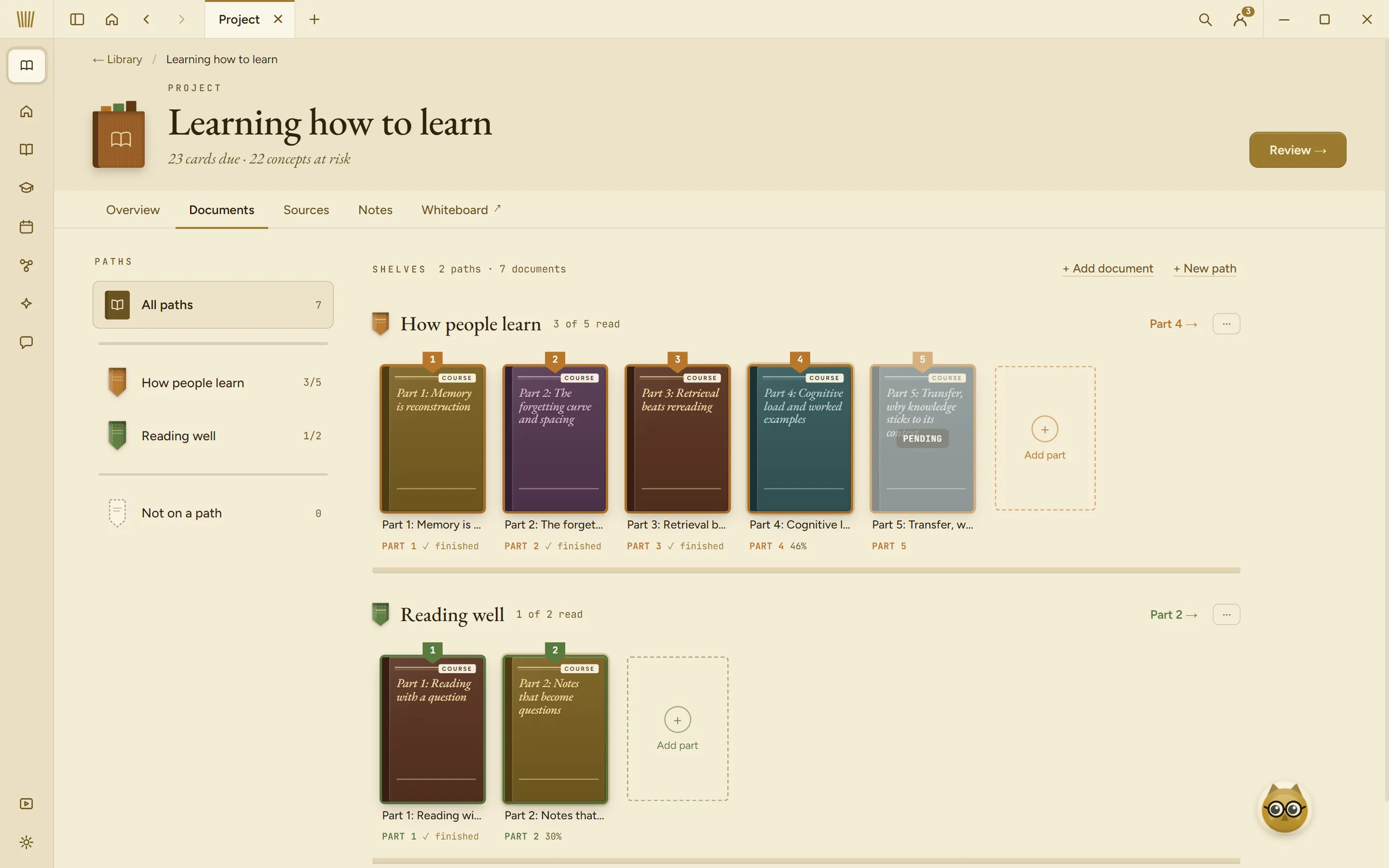
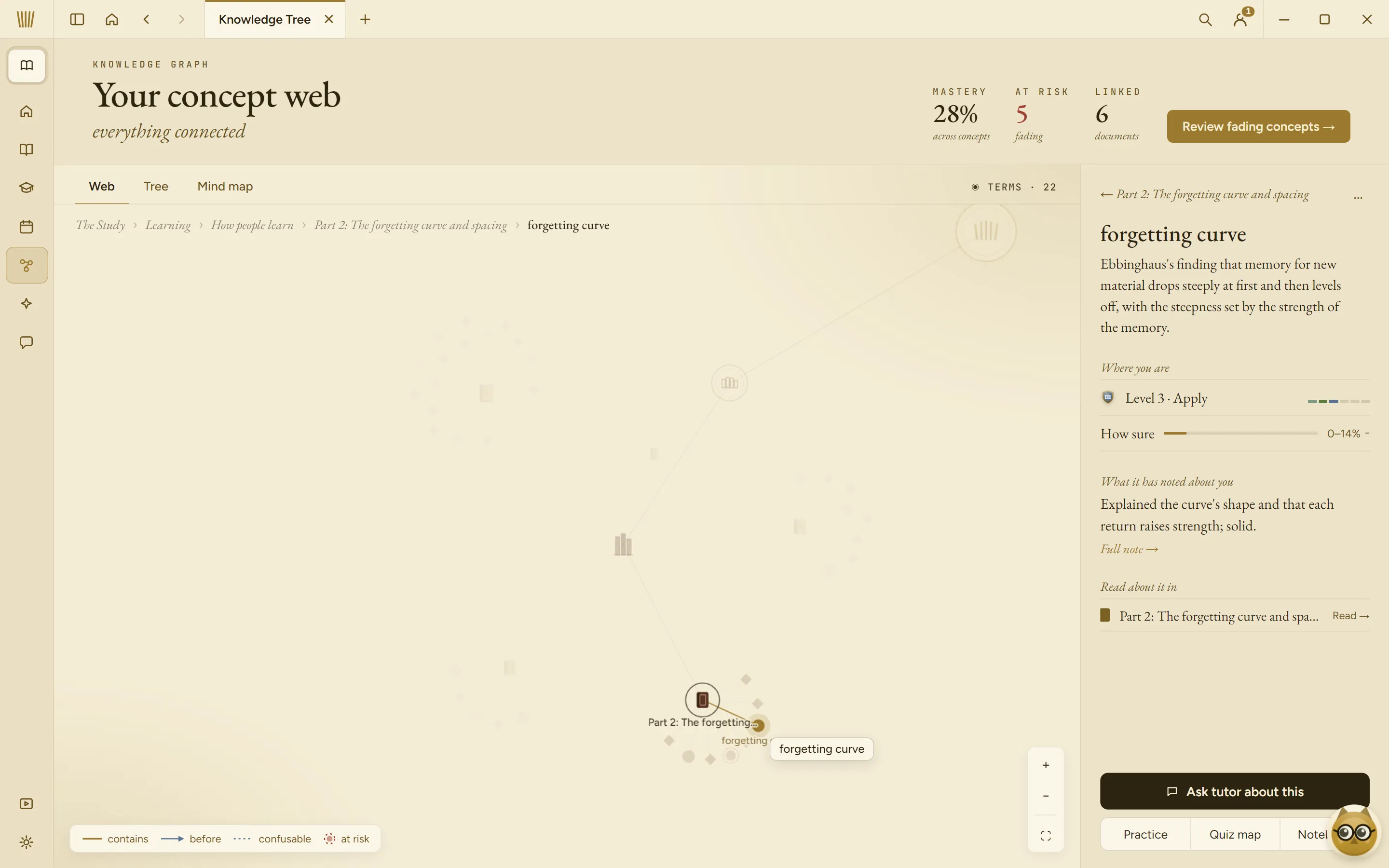
QuireMind doesn't track "the course"; it tracks each concept in it. For every one it knows where you met it, how far up the staircase you've climbed, what you got wrong, and when it should ask again. The tutor reads that memory before it answers you, so it doesn't repeat what you know or skip what you don't.
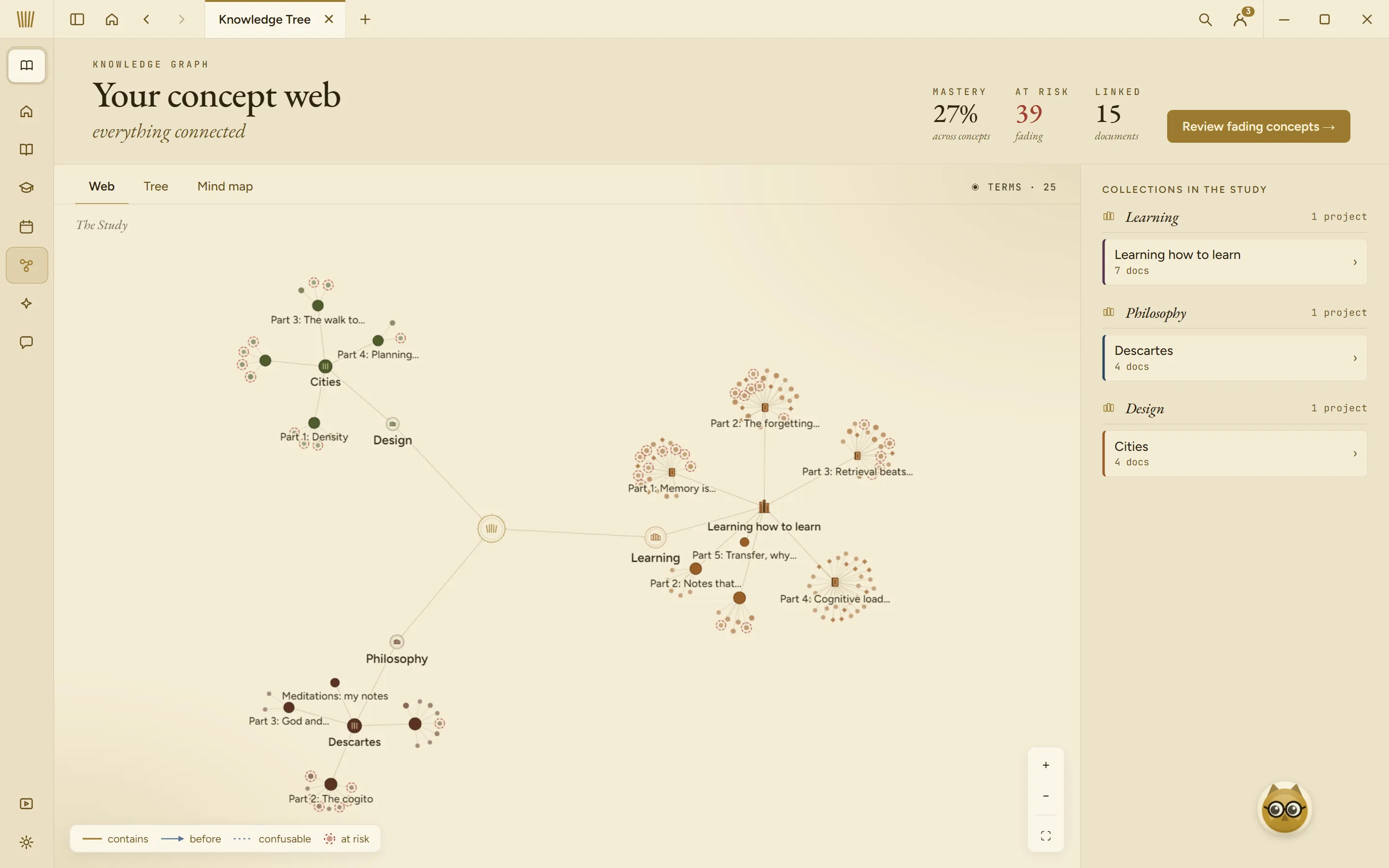
The knowledge web · every concept you studyOne concept, opened
The knowledge web shows all of it at once: every concept as a dot, joined to the readings and concepts it came from. Open one and you see its climb, its notes and its history.
V · See it in action
Watch a course being made.
Three recordings from the app, nothing staged: a course gets made for a trip to Rome, a part is read with the tutor, a study session goes back to the source.
1:23
A course gets made: the interview, a quick check, then a plan shaped by both01
1:47
Reading with the tutor: primer, aids, a spar, Finish02
1:38
A study session: answer, check the source, talk it through, get graded, note03
VI · It won't think for you
The task is negotiable. The function is not.
Built to make you better at it, not to do it for you.
When an AI does your thinking, you get the answer and miss the understanding.
It keeps the hard parts
Remembering
Arguing with a passage
Putting an idea in your own words
Thinking over a question with no set answer
It takes away the rest
Deciding what to study
Making the cards
Planning the reviews
Keeping track of what you know
VII · Your own material
Start from a question, or from your own material.
Drop in lecture notes, a PDF, a book chapter or a web page, and the course is built on it. Or start with nothing but something you're curious about.
Lecture 4PDF
My notesText
An articleWeb
or just a question
Your course
Three parts, built on what you brought
IWhat the lecture assumed
IIThe argument in the article
IIIWhere your notes disagree
Also in the app
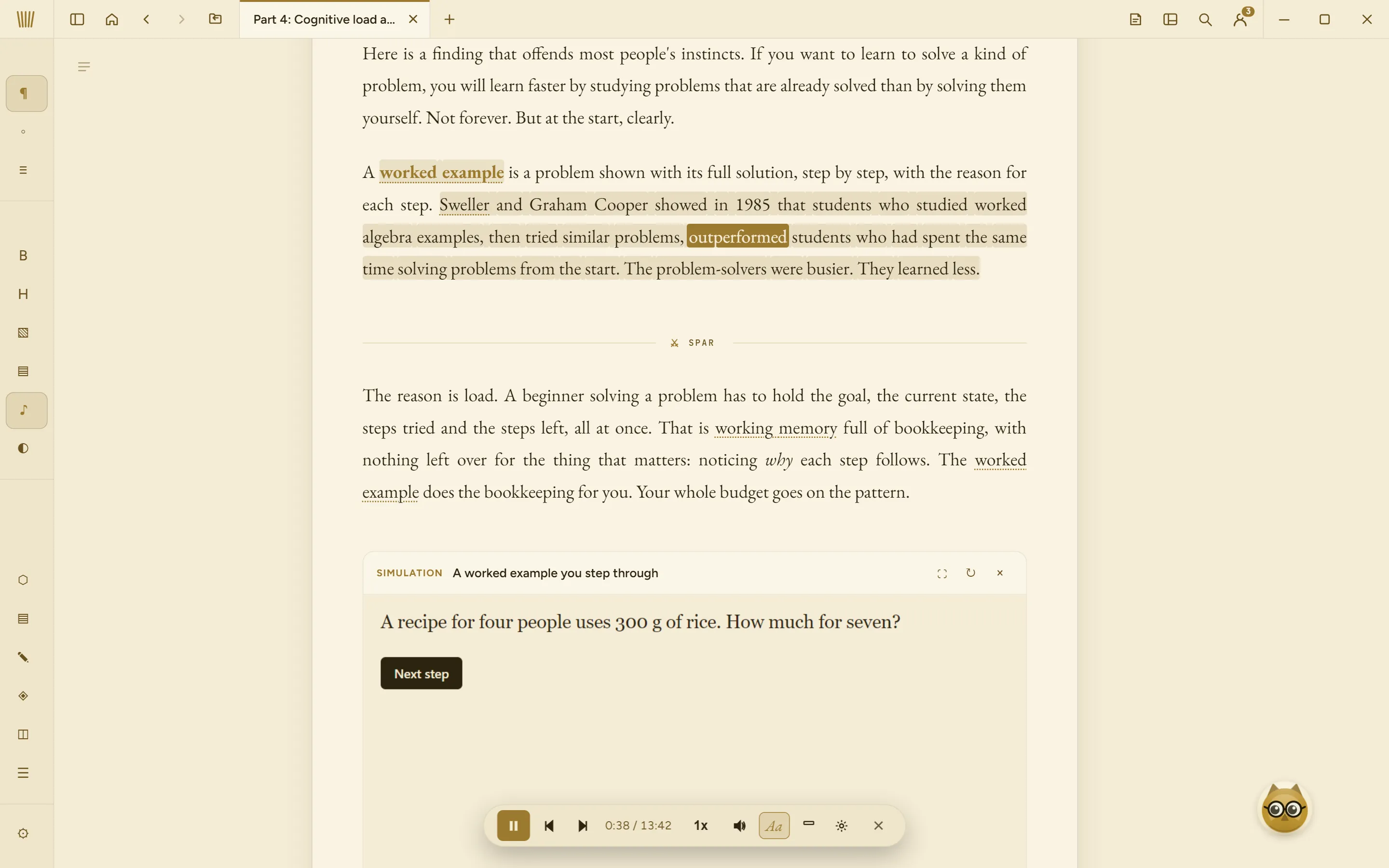
Read aloud, and other reading aidsThe page read to you, each word lit as it is spoken. Speed reading, bionic text and a reading guide are a click away.
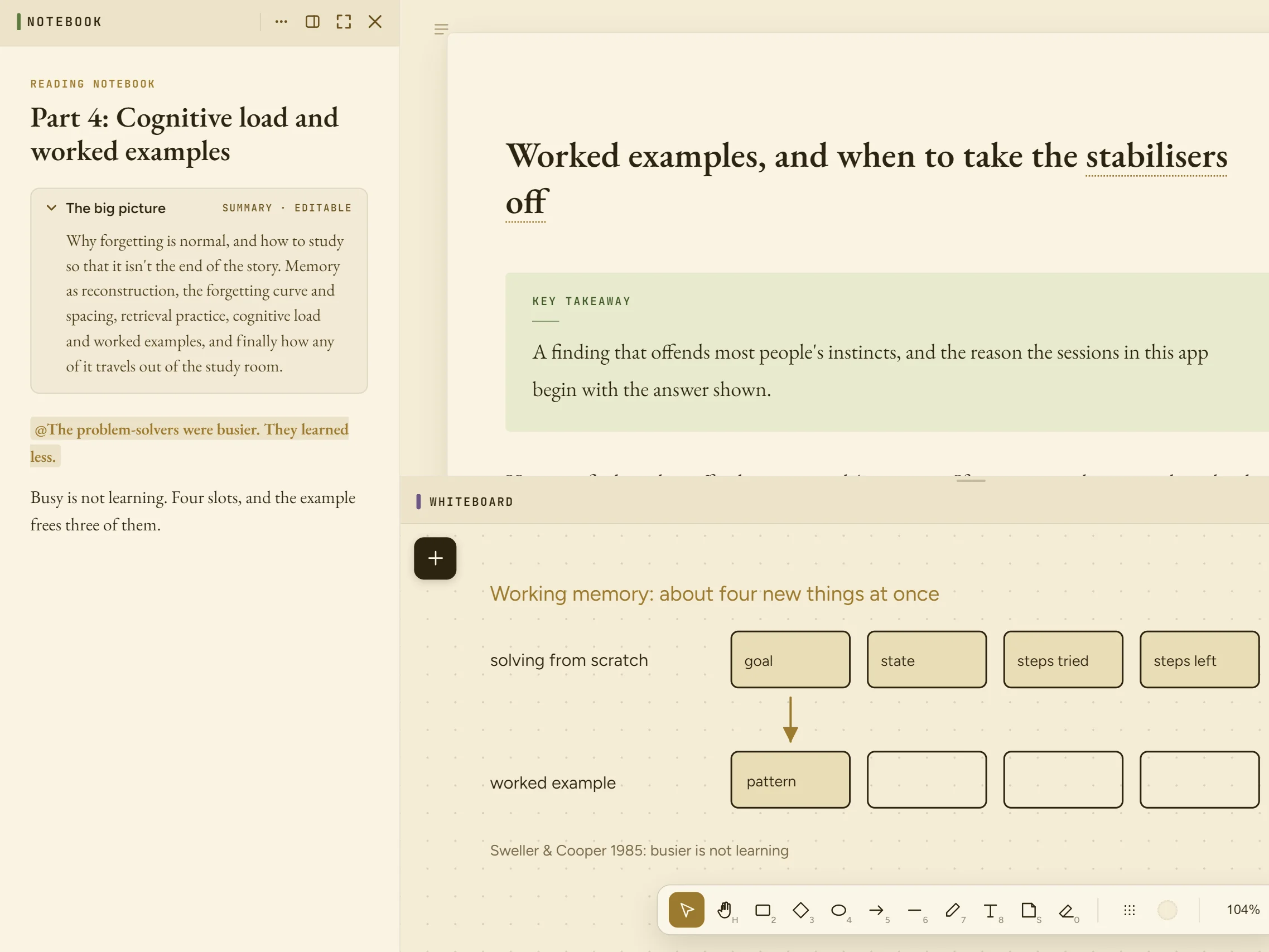
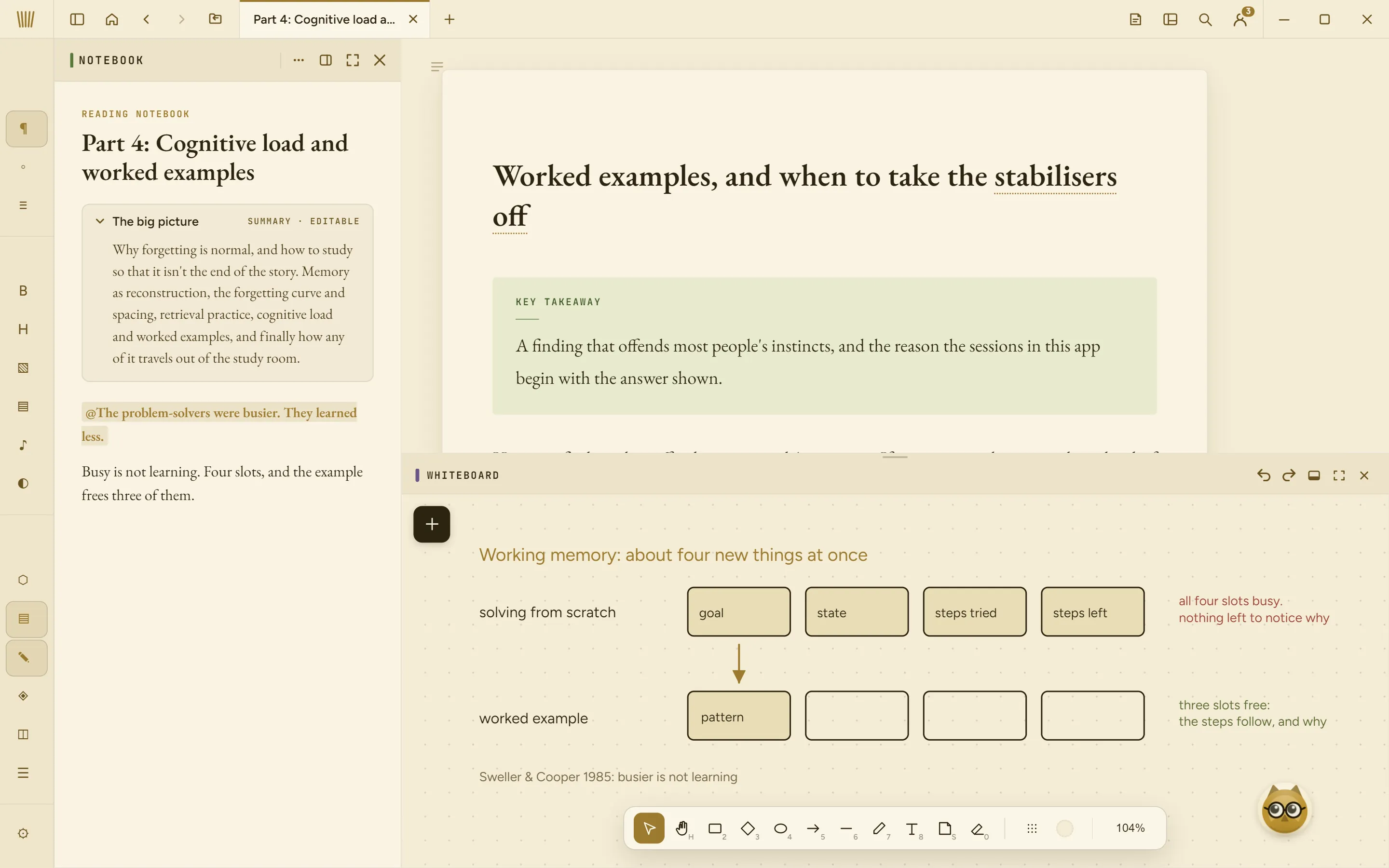
A notebook and a whiteboardWrite and sketch beside what you read.
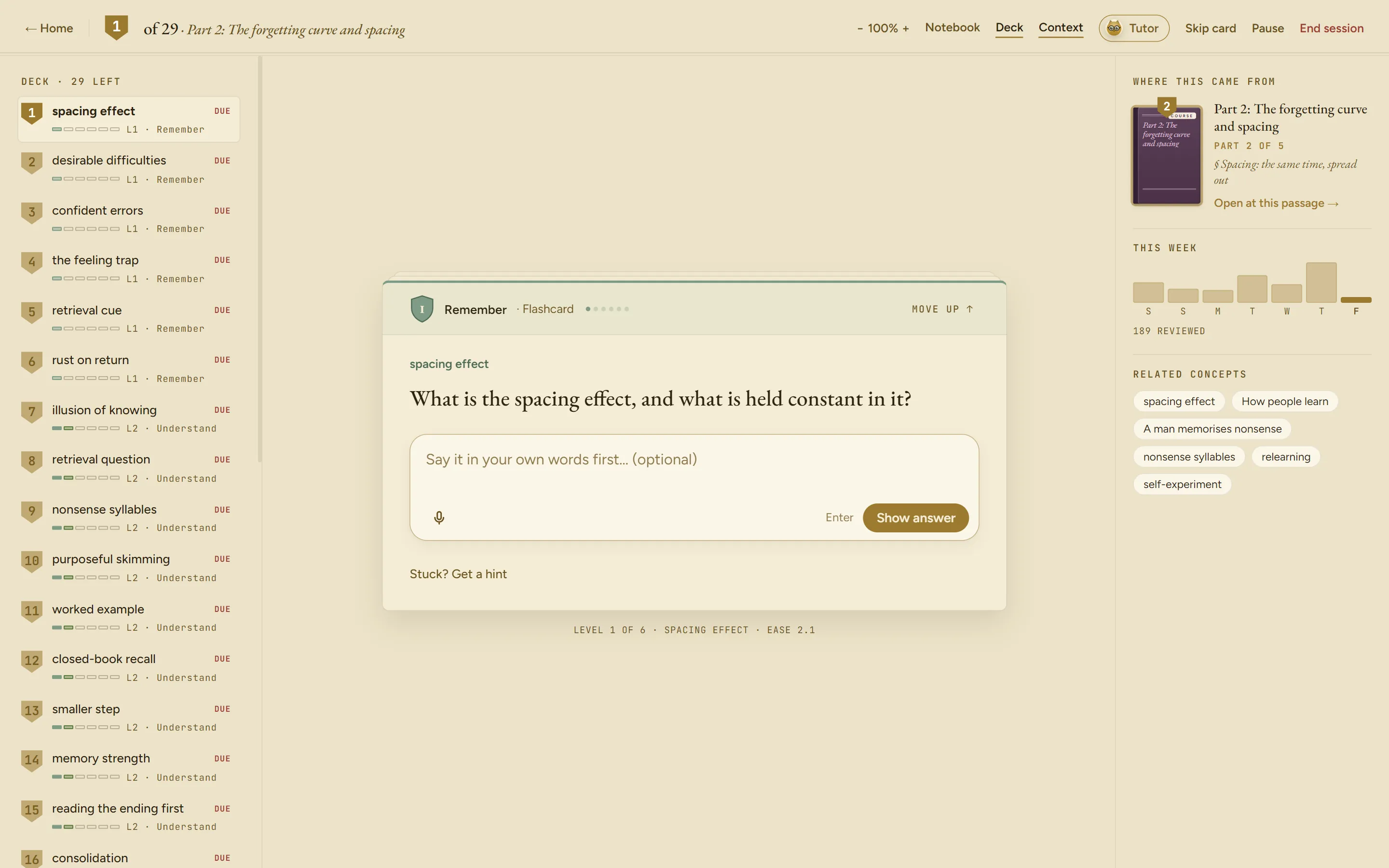
A study sessionCards, questions and talk-it-out, graded as you go.
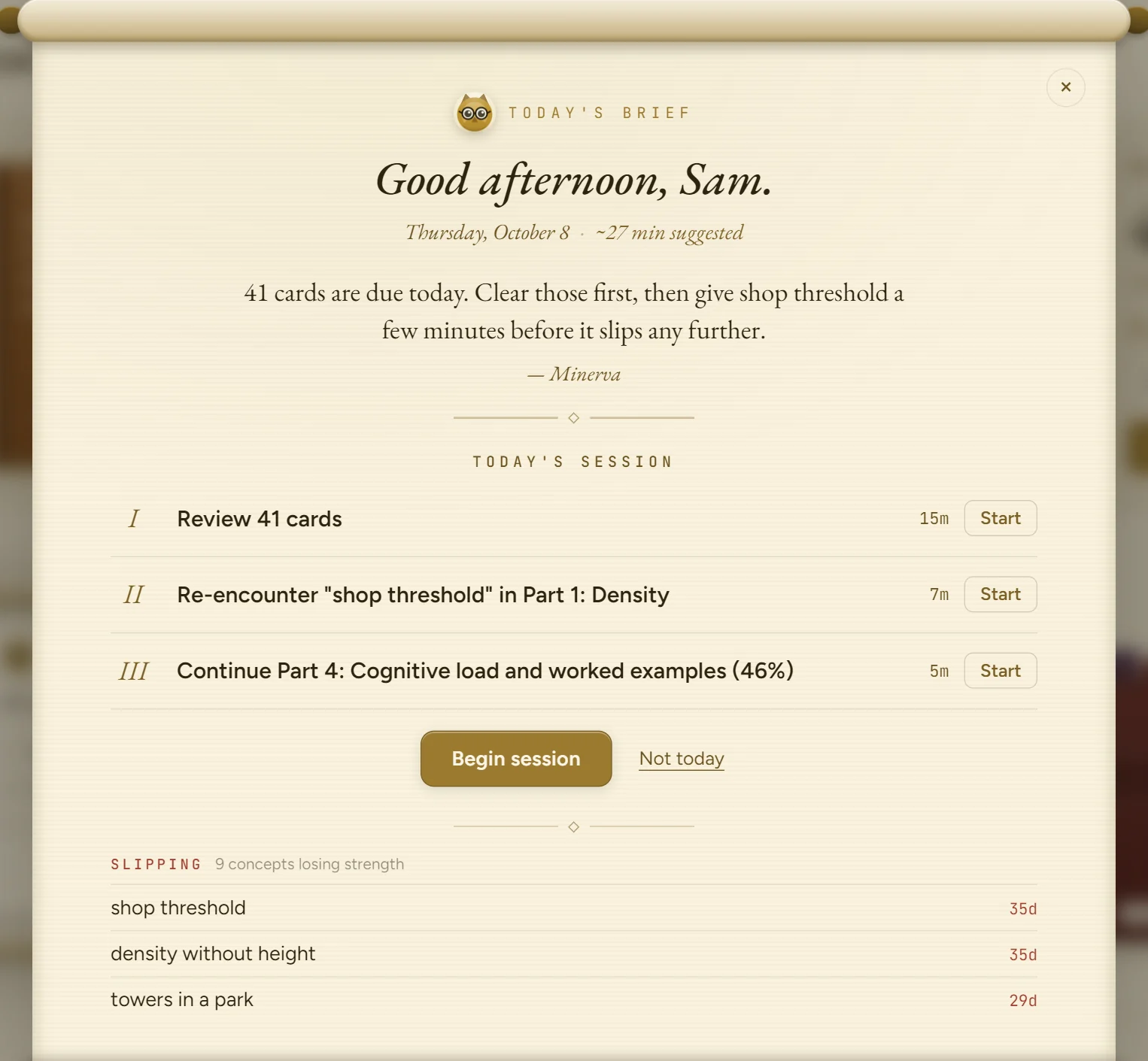
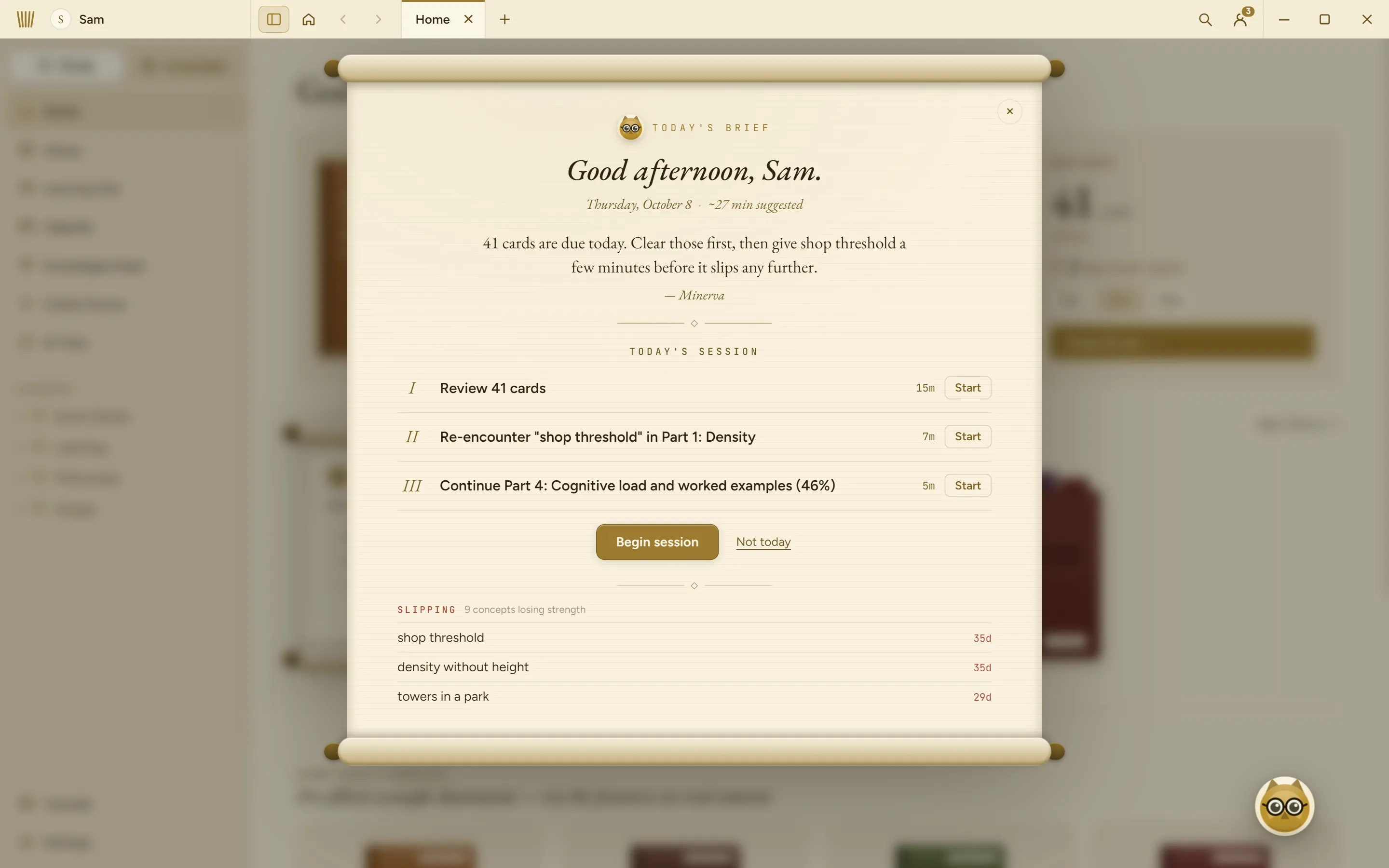
Your daily briefWhat to read, review and revisit today, in one study time, with what is slipping.
VIII · Who it's for
For the curious
You're curious about something.
You want more than a chatbot conversation: a real course, at your pace, that remembers where you left off.
For the exam
You're studying for something.
A university course or an exam. Bring the material and get a plan, practice and reviews.
For the self-taught
You're teaching yourself something serious.
Philosophy, a new field for work, a subject you always meant to get into.
Your library stays on your computer.
Your documents, notes and progress are saved on your own machine. When the tutor or the course writer needs AI, only the text for that request is sent to the AI.
IX · Why I'm building this
I trained as an architect, and I've been writing about what education is for now that machines can do much of the work people were trained to do. QuireMind is the practical half of that work. It takes care of the part of learning that is getting knowledge from a page into your head, and does it patiently, at your pace. That leaves time with other people for what only people can do together: discussion, judgement, finding out what you think.
Daniel StaflinAalborg · 2026
For schools, teachers and teams
Teaching a group?
A folk high school class, a university course or a team at work: if you'd like to try QuireMind with your learners, I'm looking for a few pilot partners. Practice is built on Bloom's taxonomy, and every learner's progress is tracked concept by concept.
I'm testing it now. People on the waitlist hear first.
What do I need?
A Windows computer. A Mac version comes later.
Will it cost money?
There will be a free version. Pricing comes with the launch.
Does it replace teachers?
No. It takes care of explaining, practising and remembering. That frees time with teachers and other learners for what people do best together: discussing, judging what matters and growing as a person.